
Why SakuraMedia: keeping what you love
I built SakuraMedia because I wanted one place that connects discovery, watching, and collecting. When a movie catches my eye, I can note it down; when a frame moves me, I can keep it as a moment; when a scene is something I truly want to keep, I can cut it out, organize it, and back it up properly.
To me, the value of a media library also shows in these choices that accumulate slowly. This article is about what I hope SakuraMedia keeps for me, and I hope you can find a way of collecting that suits you.
What do I actually want to keep
When I used to collect movies, my most direct thought was to download them and put them on a drive. Watching the library grow made me feel I had kept a lot.
But over time I began to lose track: which ones I truly liked, which ones just seemed good at the time, and which ones I never opened again after downloading.
The files kept piling up, yet the things I actually wanted to revisit weren't necessarily any easier to find.
So now I prefer to start collecting from one question: what do I actually want to keep from this movie?
Start by remembering a movie
Some movies I want to keep in full; others I only want to remember, to watch later when I'm in the mood.
For the latter, the movie number, the metadata, and a record saying "I want to collect this" are enough. As long as the source can still be found, I can get the original back after losing it.
But if my own collection list is lost, it's very hard to rebuild from memory.
So I don't keep multiple backups of every movie that can be re-obtained. What I care about more is keeping my own collecting record.
Moments, to remember why I like it
Remembering a movie alone is sometimes not enough.
It might be a frame in a two-hour video that made me pause; or after watching, only a few places I still want to revisit.
If I just put the whole movie into my collection, next time I open it I still have to drag the progress bar to search. Over time I may even forget why I collected it in the first place.
A moment keeps that more specific liking: which work, which position, what the frame looked like.
To me, the instant I mark a moment, a round of selection is already done. That choice is worth keeping, and even if the original is cleaned up later, it shouldn't disappear with it.
I want moments to be a long-term record. Ideally, if the original is still there, I can go back to the movie from here; if it isn't, I can still see the collected frame, its position, and the collection it belongs to. When I find the source again later, I can try to reconnect the record.
The current version does not yet support keeping a moment independently of its source media: deleting media also deletes its moments and collection memberships. To keep a moment, keep the source media; to keep a segment independently, create a clip first. For the actual steps, see Collections and organization.
Of course, finding the same work again doesn't necessarily mean finding exactly the same file. Different versions may have different intros and edits, and the original timestamp may not be accurate. But as long as the frame and the record are still there, there is still a lead to follow.
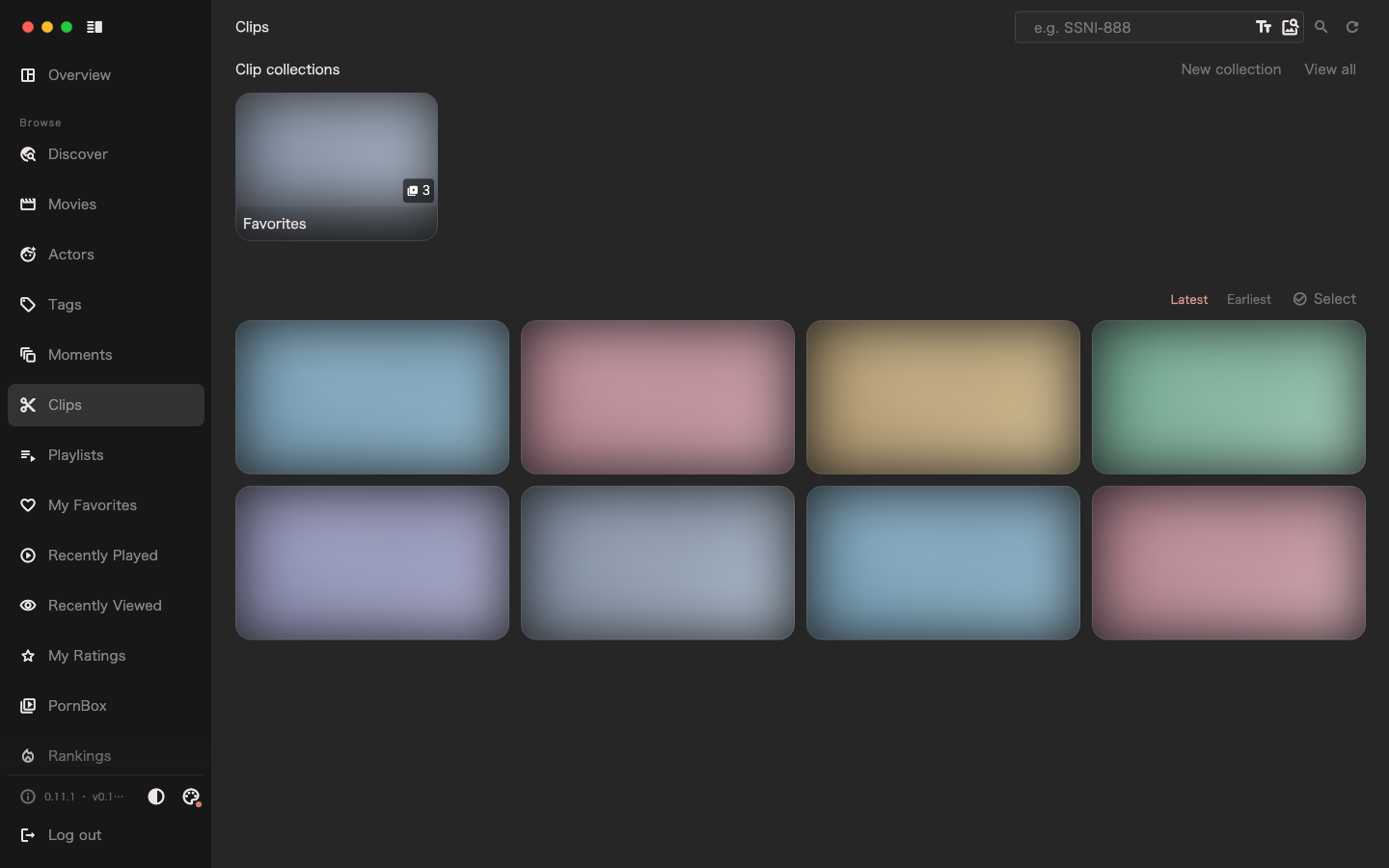
Clips, to actually keep the segment I like
Some segments I really like, and I want to keep them properly. Even if I clean up the original one day, these few minutes are still in my collection.
That's why I use clips.
After cutting a favorite range into a separate file, I can watch it directly, or put segments from different movies into the same collection. For movies where I only like a short part, this also gives me room to clean up the original.
I back these clips up carefully. They are what I spent time picking out and truly want to keep. Fortunately, clips are usually much smaller than the whole original, so an extra backup doesn't take much space. With that little space, keeping the segments I like safe and sound is very much worth it to me.
I don't cut every moment into a file. Most likes are fine to just note down first; only the passages I revisit repeatedly and truly want to keep get saved as clips.
Collections, to keep my own way of organizing
Once the collection grows, I also need a way to reorganize it.
I can group by actor or theme, or just put things together because they look good together, or record a preference from a certain period. Moment collections gather the frames and positions I like; clip collections organize the segments I actually kept.
There is no single answer to these categories. Their value lies in being my own choice.
The same set of movies: different people will pick different moments, keep different clips, and organize them into completely different collections. Only then does a collection gradually take on a personal shape.
So what needs preserving isn't just the entries themselves, but the relationships between them: which collection they went into, how they're arranged, and why they belong together.
How I arrange my own collection
My media library keeps receiving new movies. I browse the rankings to see what's worth watching lately; I follow actors I like and look forward to their new work. Part of the fun of collecting lies in these things I haven't watched yet and might like.
For me, a fairly natural process is:
- Discover movies I'm interested in from the rankings, or find new releases by following subscribed actors.
- Hand the movies I want to watch to subscriptions and auto-download, and watch them slowly when they're ready and I have time.
- When I hit something I like while watching, keep it as a moment.
- After revisiting, turn the passages I really want to keep independently into clips.
- If I especially like the whole thing, or the source is hard to re-obtain, keep and back up the original.
- When space runs short, clean up based on actual preference, not just on "whether I downloaded it back then".
I allocate backup effort the same way: collecting records and collections deserve protection first, standalone clips need their files kept, and scarce originals need extra care. When backing up, also cover actual files such as preview images; don't assume backing up the database covers everything.
I hope the library I end up with is a place I'm willing to open often. New movies are waiting to be explored, and I can also find works I once liked, recognizing at a glance the frame that moved me back then.
I hope originals can come and go, while the collection slowly accumulates. Years later, when I open it again, I still know what I liked, and I still have a lead back there.